
Andong International Mask Dance Festival: Where 23 Nations Celebrate the Art of the Mask
The Andong International Mask Dance Festival brings together performers from 23 countries in Korea's Gyeongbuk province. UNESCO heritage mask dances meet Malaysian traditions at this global cultural celebration.
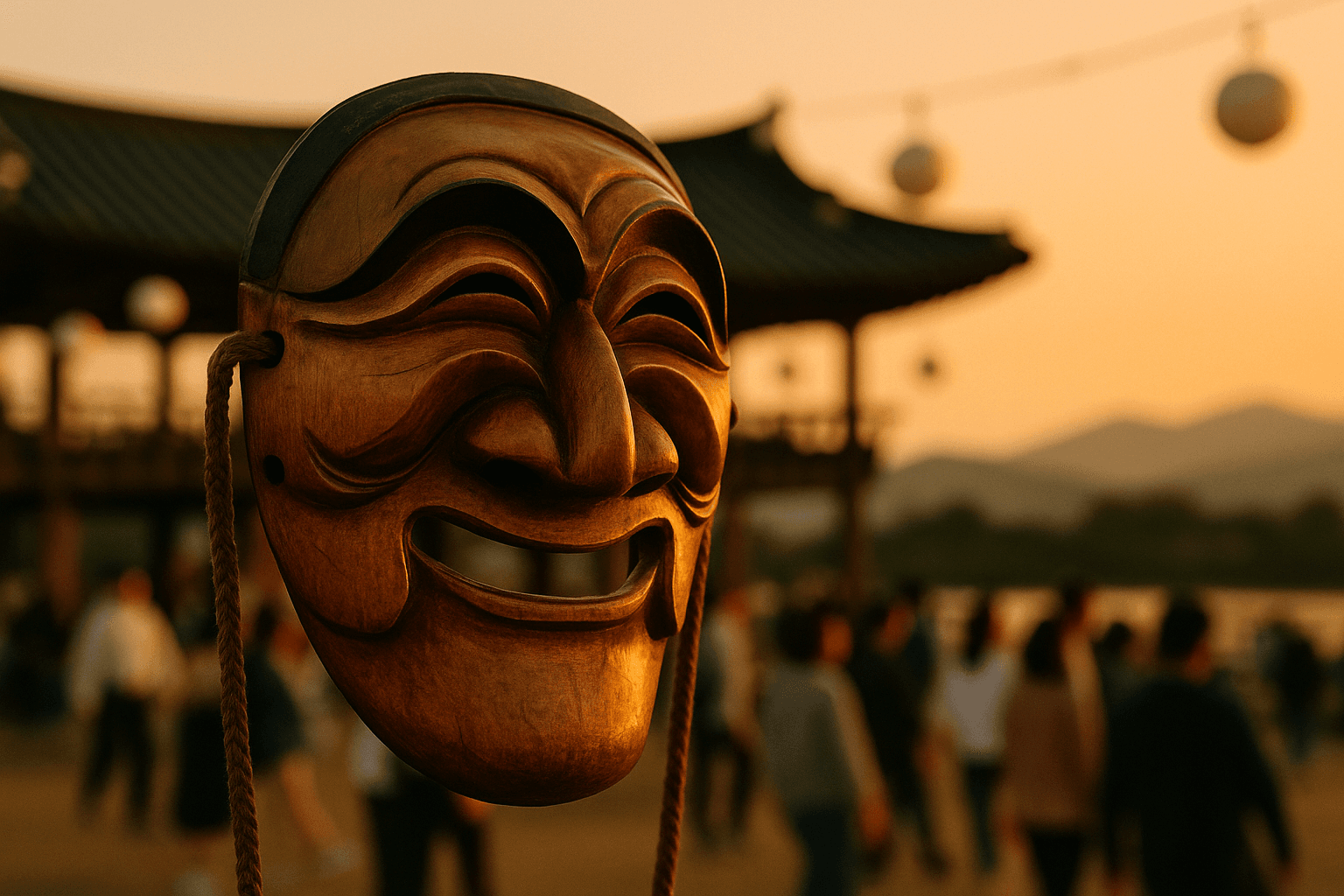
Andong International Mask Dance Festival: Where 23 Nations Celebrate the Art of the Mask
The Andong International Mask Dance Festival transforms a quiet corner of South Korea's Gyeongbuk province into a living museum of masked performance. For eleven days, performers from 23 countries converge on Andong under the theme "Memories of Masks, Dance for All." It's a masterclass in how a regional traditional festival can evolve into a global cultural platform—and a case study in what happens when centuries-old ritual meets contemporary cultural exchange.
Why Andong? Why now?
According to recent Korean media reports, the festival earned a coveted spot on the Ministry of Culture, Sports and Tourism's 2026–2028 Global Festivals roster. That designation comes with 800 million won (roughly $600,000) in annual national funding for the next three years. But the money isn't the story. The real story is official recognition: Korea's regional heritage can anchor international cultural dialogue.
Andong didn't luck into this role. The city is home to Hahoe Byeolsingut Talchum, a UNESCO Intangible Cultural Heritage mask dance that dates back centuries. It's where the living tradition of Korean mask theatre—from Bongsan Talchum to Gangnyeong Talchum to Dongnae Yaryu—has roots that run deep. This year, seventeen Korean traditional mask troupes and twenty-seven international performance groups will occupy simultaneous stages at Jungangseon 1942 Andong Station, Talchum Park, and Hahoe Village. The festival doesn't just show you mask culture. It immerses you in it.
Designed for Participation, Not Just Observation
Recent coverage highlights a shift: this isn't a festival you watch from the sidelines. Four Global Mask Parades are scheduled (September 26, 27, 30, and October 3), and visitors can learn traditional mask dance and the festival's signature "Tallala Dance" at Talchum Park workshops. A roving troupe called "Remember" stages guerrilla performances throughout the grounds—spontaneous eruptions of movement and music that keep the energy unpredictable.
This design philosophy dovetails with the festival's strategy to attract international tourists. Enhanced nighttime programming and stay-over tourism content mean visitors aren't just passing through. The festival wants you to linger. Explore the traditional liquor expo. Visit the Mask Atelier. Study winning entries from the World Creative Mask Competition. It's a deliberate pivot from day-trip event to multi-day cultural immersion.
Malaysia as Guest of Honor: Southeast Asia Takes Center Stage
Choosing Malaysia as this year's guest nation is a fascinating move. An official delegation and performance troupe from Sabah, Borneo, will participate, and "Malaysia Guest Nation Day" will feature Hahoe Byeolsingut Talchum alongside Malaysian traditional performances on a shared stage. The Sabah Cultural Pavilion showcases local masks, crafts, and tourism content.
This isn't just ceremonial. It's an exploration of where Korean and Southeast Asian performance traditions overlap. Masked ritual theatre exists across cultures, and putting them side by side reveals shared roots in ceremony and storytelling. Andong is positioning itself as a hub for Asian traditional performance networks, and Malaysia's participation signals ambition beyond the usual East Asian cultural circuit.
Seonyu Julbul Nori: Fire on the Water
One of the festival's most visually arresting moments happens after dark at Hahoe Village. Seonyu Julbul Nori is a traditional Andong fire play: performers string a line across the river between Buyongdae Cliff and Mansongjung Pavilion, hang bags of charcoal powder from the line, and set them ablaze. The resulting curtain of fire—combined with falling sparks, "egg fire," and boat performances—recreates a Joseon-era scholar's evening of leisure, reinterpreted for a twenty-first-century audience.
It's proof that traditional cultural festivals can deliver visceral, sensory experiences without sacrificing authenticity. This isn't about preserving the past in amber. It's about using elemental forces—light, shadow, water, flame—to create new memories anchored in old forms.
Programming Across Generations: The Secret to Longevity
The festival's range is intentional. "Imae Jangga Ganeun Nal" (university-level mask dance), children's puppet theatre, and madang-geuk (Korean yard plays) ensure every generation finds an entry point. It's how you keep tradition alive—not by freezing it in time, but by making it legible and inviting to people encountering it for the first time.
Competition formats matter, too. The World Mask Theatre Competition and Mask Drawing Contest create stakes, motivating participants while facilitating organic exchange between international troupes and festival-goers. It's structured to feel spontaneous.
How a Regional Festival Becomes a Global Platform
The Andong International Mask Dance Festival proves that local cultural assets can speak a global language. The key isn't translation—it's context. The festival doesn't explain Hahoe Byeolsingut Talchum's historical significance in isolation. Instead, it places it onstage alongside performers from twenty-three other countries and lets audiences discover commonalities and contrasts on their own.
Strategies like enhanced nighttime programming for international tourists, stay-over content development, and the guest nation system transform the festival from a one-off event into the anchor of a cultural tourism ecosystem. Want to dive deeper into Korea's cultural exports? Explore more K-Lifestyle stories on K-Blog.
What Andong Leaves Behind
When the eleven-day festival wraps, what remains? Tourism revenue and visitor counts are measurable. But the more significant outcome is perceptual: Andong is becoming recognized as a global center for mask culture. The three-year Global Festival designation is a framework, and the international networks and content archives built during that time become Andong's cultural capital.
The evolution of a traditional cultural festival ultimately asks: Whose tradition is this? The Andong International Mask Dance Festival answers with "everyone's." It's built as an open structure—designed so local residents, domestic tourists, international visitors, and the next generation can all participate and interpret it on their own terms.
Frequently Asked Questions
- When and where does the Andong International Mask Dance Festival take place?
- The festival runs for eleven days, from September 24 to October 4, 2026, across multiple venues in Andong, Gyeongbuk province: Jungangseon 1942 Andong Station, Talchum Park, the downtown area, and Hahoe Village. The official opening ceremony is September 25 at 7 PM on the main stage at Jungangseon 1942 Andong Station.
- Which countries are participating in the festival?
- Twenty-three countries are represented by twenty-seven international performance troupes. Malaysia is this year's guest nation, with an official delegation and performance group from Sabah, Borneo, performing alongside Korea's Hahoe Byeolsingut Talchum. Domestically, seventeen traditional Korean mask dance troupes and ten madang-geuk and creative theatre teams are participating.
- Can visitors participate in the festival, or is it just for watching performances?
- Participation is a big part of the experience. Four Global Mask Parades are scheduled (September 26, 27, 30, and October 3), and you can learn traditional mask dance and the 'Tallala Dance' at Talchum Park. The Mask Atelier lets you create your own mask, and competitions like the World Mask Theatre Competition and Mask Drawing Contest are open to participants.
- When can I see the Seonyu Julbul Nori fire performance at Hahoe Village?
- Seonyu Julbul Nori takes place at Mansongjung Pavilion and Buyongdae Cliff on September 26 and October 3 at 7 PM, and October 4 at 6:30 PM. It's a traditional Andong fire play where performers set a line of charcoal bags ablaze across the river, combined with falling sparks and boat performances—one of the festival's signature nighttime spectacles.