
Australian Korean Food Import Guide: How to Get K-Snacks Outside Sydney in 2026
Australian Korean food import made simple for 2026. Compare Perth, Brisbane, Adelaide K-food access, GST rules, Australia K-food quarantine, and EMS direct shipping—all in one guide.

Australian Korean Food Import Guide: How to Get K-Snacks Outside Sydney in 2026
The biggest reason Aussies search for Australian Korean food import options? They don't live in Sydney or Melbourne.
Sure, those two cities have robust Korean grocery networks—you can walk to a H-Mart clone in Strathfield or Carnegie. But if you're in Perth, Brisbane, Adelaide, or the Gold Coast? K-food access drops off a cliff. That's the reality for tens of thousands of K-pop fans, Korean expats, and Buldak addicts across Australia in 2026.
This guide walks through every way to get Korean snacks and groceries delivered to regional Australia—from local shops (where they exist) to direct EMS shipping from Korea. We'll also decode Australia's notoriously strict Biosecurity quarantine rules and GST tax structure, so you know exactly what clears customs and what gets seized.
The Great Australian K-Food Divide: Sydney vs. Everywhere Else
Australia's Korean community sits at around 100,000 people in 2026. Sixty percent live in Sydney, twenty percent in Melbourne, and the remaining twenty percent are scattered across Perth, Brisbane, Adelaide, and smaller cities. That population distribution is why the K-food retail map looks so lopsided.
Sydney's Strathfield, Eastwood, and Chatswood neighborhoods? Absolute K-food meccas. Dozens of Korean grocers stock everything from Buldak Hot Chicken Ramen (every flavor) to banana milk, soju, kimchi, and banchan. Melbourne's Carnegie and Glen Waverley mirror that density.
Everywhere else? You're lucky if there's one Korean grocer—and often there's none at all. That's why Australian Korean food import demand is exploding outside the big two cities.
Sydney and Melbourne: K-Mart Saturation
Strathfield in Sydney is nicknamed "Little Korea." Lee's Mart, Hanyoung Mart, and Hankook Hyupdong cluster along Albert Road, stocking full inventories of Shin Ramyun, Choco Pie, Korean instant coffee, frozen mandu, and fresh produce. Eastwood and Chatswood offer similar depth.
In Melbourne, Carnegie's K-Mart Melbourne and Glen Waverley's CJ Mart are the anchors. Both cities have reached critical mass: if the local Korean population exceeds 20,000, specialist grocers can survive and thrive. Below that threshold? The market can't support a dedicated store, and the K-food desert begins.
Perth, Brisbane, Adelaide: The K-Food Gaps
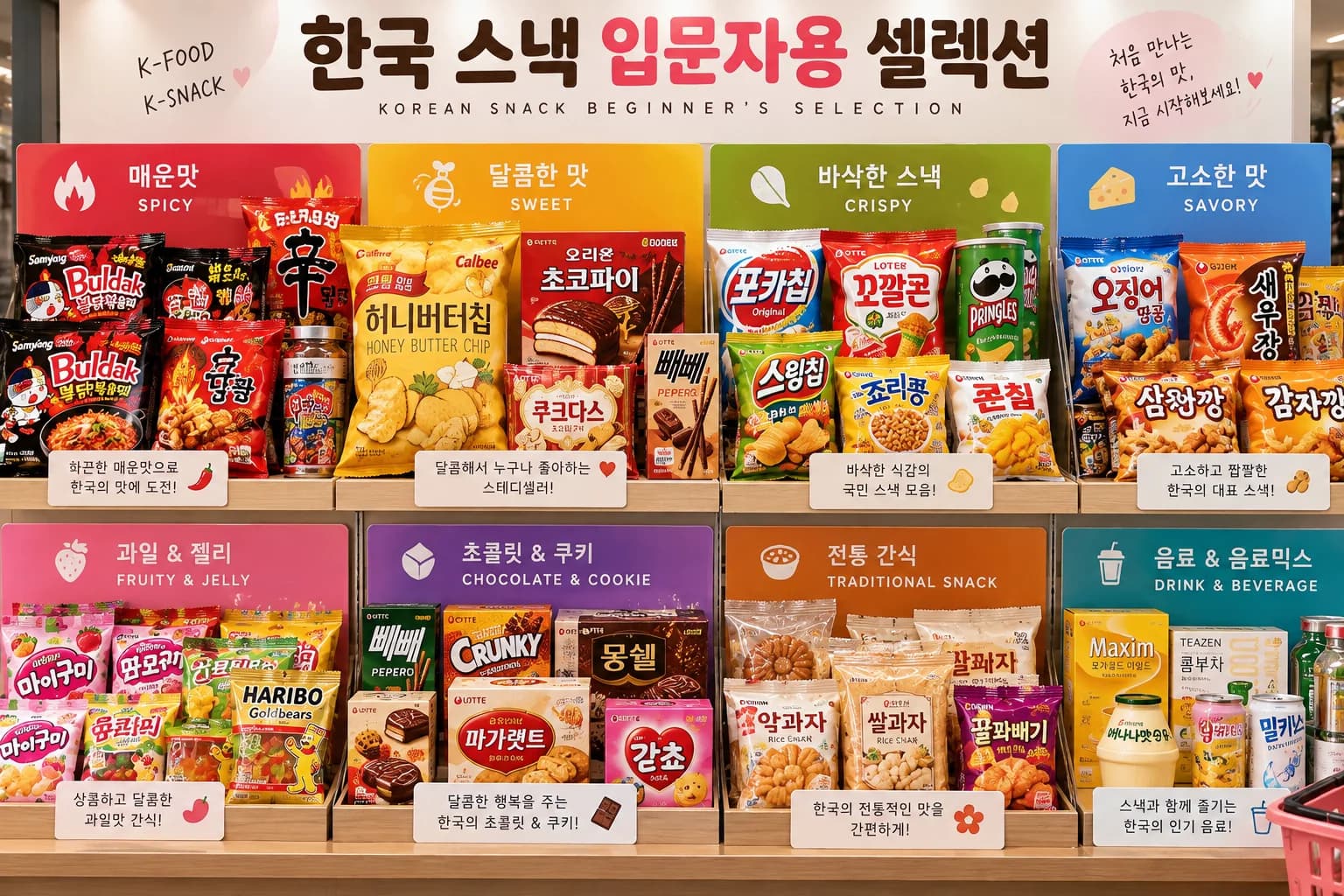
Perth is Western Australia's biggest city, but K-food access is brutal. As of 2026, there's essentially one specialist shop—Han's Korean Market in Northbridge—and the international aisles at Woolworths and Coles carry maybe original Buldak and a few packs of Shin Ramyun. Honey Butter Chips? Soju? Good luck finding them locally.
Brisbane and the Gold Coast have 2–3 Korean grocers in Sunnybank, but the selection is maybe 30–40% of what you'd find in Strathfield. Adelaide, Hobart, Darwin, and Canberra have virtually no dedicated Korean grocery infrastructure. For K-drama fans and Korean food lovers in these cities, local access is a non-starter. Online ordering or direct Australian Korean food import from Korea is the only reliable path.
Australia K-Food Quarantine: Biosecurity Rules You Must Know
Australia enforces some of the world's strictest biosecurity laws. The Australia K-food quarantine regime is especially tough on meat, fruit, vegetables, seeds, and honey. Processed foods generally clear customs—if the labeling and ingredient list are clear and in English.
What triggers Australia K-food quarantine rejection:
- Meat-containing ramyun (beef bone broth packets, pork bulgogi noodles—banned or heavily restricted)
- Fresh fruit and vegetables (total ban)
- Fresh seafood (dried or seasoned OK; fresh banned)
- Raw honey (some processed honey OK; raw banned)
What usually clears quarantine:
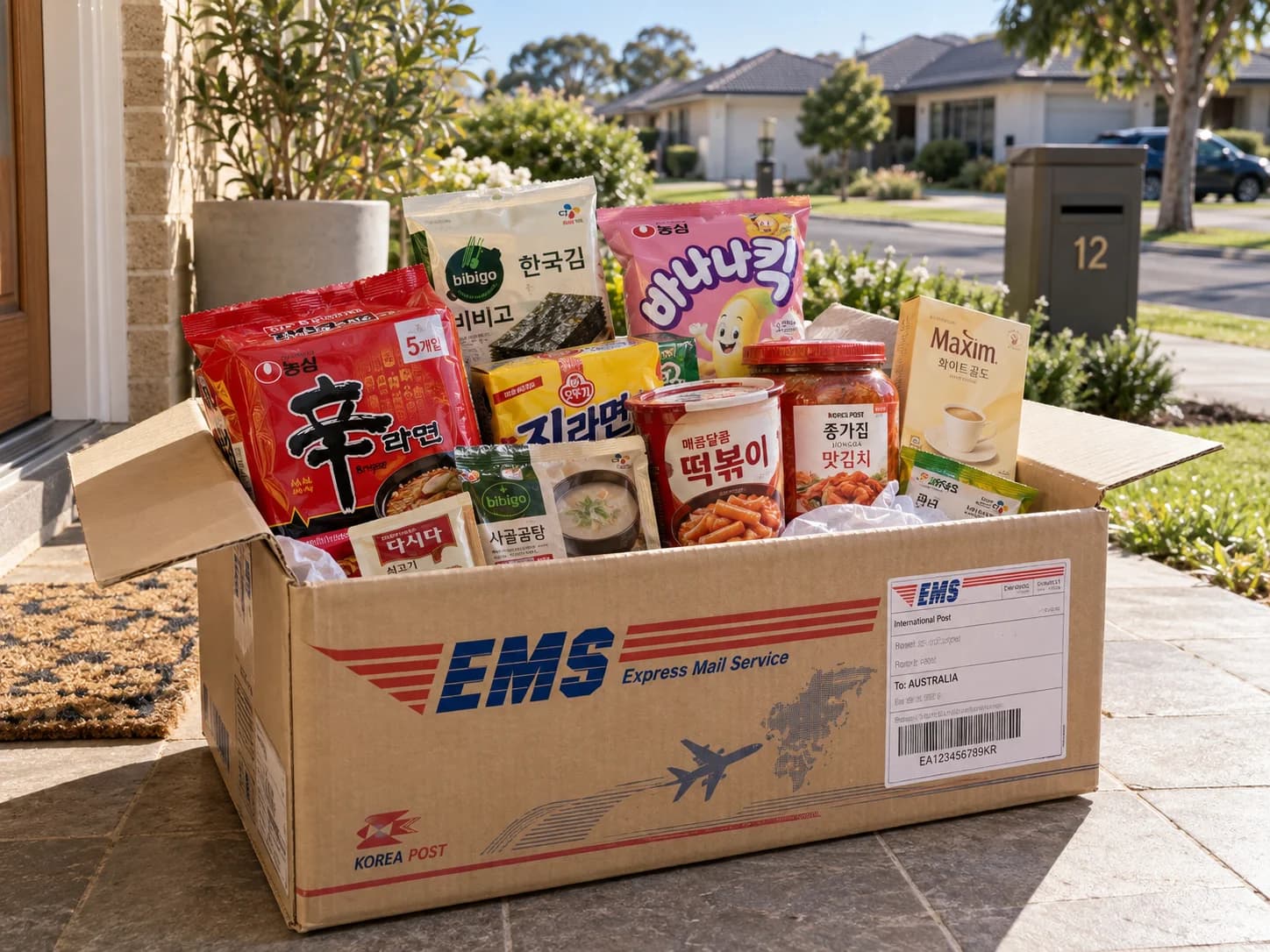
- Buldak Hot Chicken Ramen (all flavors)
- Shin Ramyun (original, cheese, carbonara)
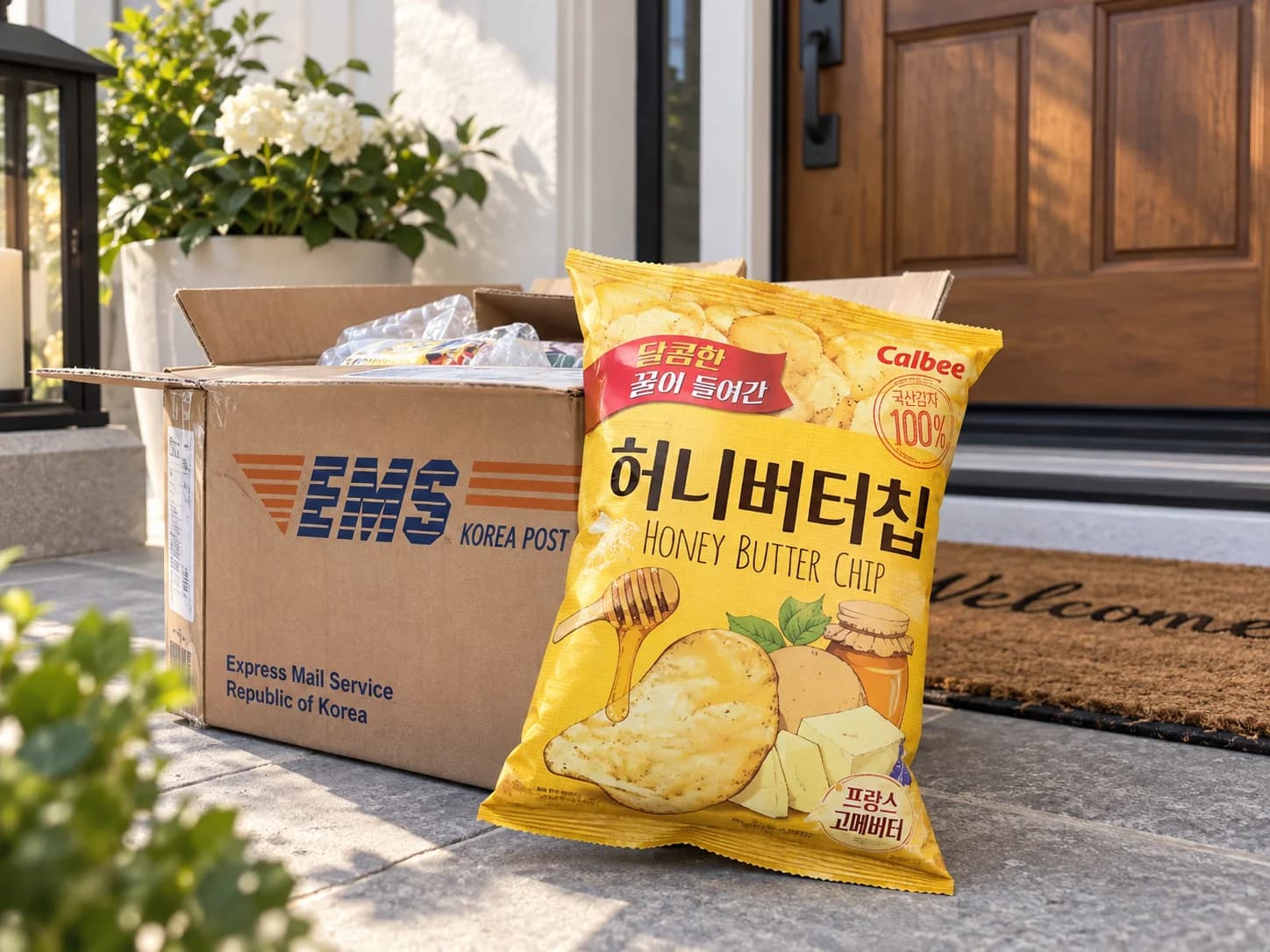
- Snacks (Honey Butter Chips, Pepero, Market O Brownies)
- Drinks (banana milk, soju, Korean soda)
- Processed kimchi in sealed jars
DelicaGlobal product pages flag Australia quarantine eligibility before checkout, so you can build a compliant box every time.
GST and Import Duty: How Australia Taxes Your K-Food
Since 2018, Australia has applied a 10% GST (Goods and Services Tax) to all imports, even low-value parcels under AUD $1,000. The seller or platform collects GST at checkout and remits it to the Australian Taxation Office (ATO).
If your shipment exceeds AUD $1,000, you may face additional import duties and processing fees. Most K-food boxes land in the AUD $200–500 range, so you'll typically only pay the 10% GST with no surprises.
At DelicaGlobal checkout, GST is automatically calculated and displayed. You see the full landed cost upfront—no hidden fees when your EMS box arrives.
DelicaGlobal: The Most Efficient Australian Korean Food Import Path
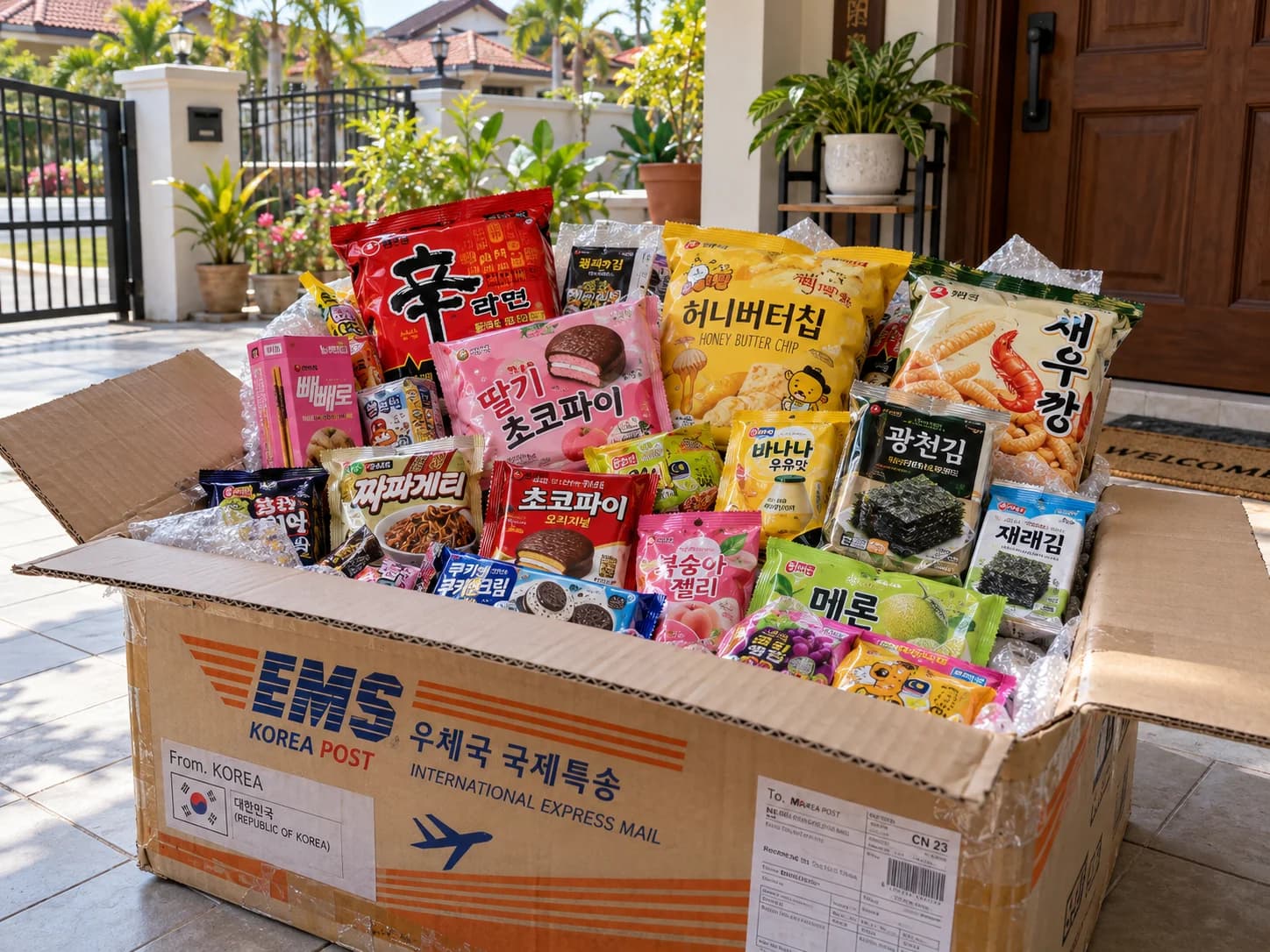
The most reliable way to get Korean snacks and groceries delivered anywhere in Australia is DelicaGlobal. You pick exactly what you want from Korea's retail shelves, and EMS ships it to your door in 7–10 days on average—whether you're in Sydney, Perth, Brisbane, Adelaide, or the Gold Coast. Regional delivery times are nearly identical.
Because you build your own box, you can select only items that pass Australia K-food quarantine. Payment works via Payple international checkout with Visa and Mastercard (AUD supported), automatic currency conversion, and GST calculation baked in. No surprise charges at customs.
Your City, Your Best Move
If you live near Strathfield or Eastwood in Sydney, or Carnegie or Glen Waverley in Melbourne, local Korean grocers are your easiest bet. Walk in, grab your Buldak, pay, and go.
But if you're anywhere else—Perth, Brisbane, Adelaide, Gold Coast, Hobart, Darwin—build your first box on DelicaGlobal and get everything shipped direct. It's faster, often cheaper (especially if you bundle 10–15 items), and infinitely more reliable than hunting down a single overpriced pack of Shin Ramyun at Woolworths.
In 2026, Australia's K-food landscape is binary: inside the two big cities, go local. Outside them, go direct. Which side of the divide do you live on?
(For a similar regional comparison in another market, check out our Hong Kong Korean Food Import Guide—it covers the same local-vs-import trade-offs.)
Frequently Asked Questions
- What Korean foods fail Australia K-food quarantine?
- Meat-containing ramyun (beef bone broth, pork bulgogi noodles), fresh fruit and vegetables, fresh seafood (dried/seasoned OK), and raw honey. Buldak, Shin Ramyun (original, cheese, carbonara), snacks, drinks, and processed kimchi usually clear customs without issue.
- How much GST do I pay on Australian Korean food import parcels?
- Australia charges 10% GST on all imports. For example, a K-food box worth AUD $300 incurs $30 GST. If your shipment exceeds AUD $1,000, additional import duties may apply. DelicaGlobal auto-calculates and displays GST at checkout.
- How long does EMS delivery take to Perth or Brisbane?
- About 7–10 days on average—nearly the same as Sydney or Melbourne. Australia's EMS network is uniform nationwide, so regional cities don't see major delays. Darwin and Hobart may add 1–2 days.
- Are Korean grocers in Australia cheaper than direct import?
- In Sydney's Strathfield or Melbourne's Carnegie, prices run 1.5–2× Korean retail. In Perth, Brisbane, or Adelaide, expect 2–3× markup. DelicaGlobal direct import (Korean retail price + EMS + 10% GST) often beats local pricing if you bundle 10–15 items in one box.